Central Line Supplies When Leaving Home
These instructions are for patients discharged home with a central line except those followed by dialysis or apheresis.
Important information:
Always bring a set of back-up supplies when your child leaves home. These supplies can help you act quickly if there’s a problem with the central line. Quick action lowers the risk of a central line-associated bloodstream infection, also called a CLABSI.
Ask your care team if a “go-bag” is available. A clinic nurse or home infusion nurse can help check your supplies, especially if your child’s central line care routine or equipment has recently changed.
Go-bag instructions:
-
Clean the bag with an antibacterial wipe at least once a month if it's made of wipeable material. Clean more often if the bag is visibly dirty. Remove all items to clean inside the pockets.
-
Check expiration dates on supplies regularly. Restock as items are used.
-
Never leave the go-bag in the car. Extreme heat or cold can damage supplies. Keep the bag at room temperature.
-
Always clean your hands before touching anything in the go-bag.
Suggested go-bag supplies
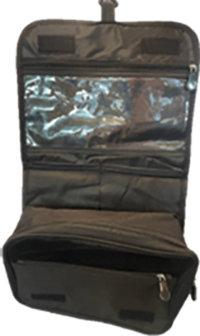 |
| Sample go-bag |
Review specific items to include with the healthcare team managing your child’s central line. Example bag contents:
-
Hand sanitizing wipes
-
Alcohol pads or Site-Scrubs®
-
Protective alcohol caps such as DualCap®
-
Protective connection barriers (for example, ValGuard®)
-
Sterile saline flushes
-
Sterile heparin flushes
-
Line securement devices, like Grip-Lok®
-
Extra primary central line dressing
-
Central line dressing used for reinforcement
-
Bandage scissors
-
4x4 inch sterile gauze packets
-
Velcro® HUG
-
AquaGuard®
-
Disposable under pad or spare prep surface
-
Phone numbers for medical providers at CHOP and your infusion company, if applicable. Suggest having in bag and saved phone contacts.
If your child needs to go to the emergency department (ED), bring the go-bag.
Also bring any infusion pump, medicine or infusion bags, tubing or extensions, and ED or travel letter. The letter can help the ED team understand your child’s needs. It is especially important if going to a non-CHOP hospital. Consider keeping the letter in the go-bag.
Important information about longer trips with a central line:
If you're planning to travel outside your region or move permanently, let your CHOP central line team and your infusion company know at least one month ahead of time. Be ready to discuss:
-
Travel dates and address(es).
-
The timing of supply delivery if your trip extends past your usual restock date.
-
Options for supply shipping. You may need to bring everything with you.
-
A plan for routine and urgent line care, such as dressing or cap change. Additional caregiver(s) may need to be trained.
For children on parenteral nutrition (PN):
Once PN bags are made, they are only stable for 7–9 days. Longer trips will require multiple shipments. Discuss this with your infusion company. There may be barriers to trips longer than one week.
Instructions for preparing for an overnight or longer trip:
Check and restock the go-bag. Keep it with you at all times while traveling. Use a waterproof bag or put supplies in a plastic bag inside your travel bag. Never use the same bag as your diaper bag or feed bag. These bags may have extra germs.
Count total supply amounts for routine central line care and any medicines or infusion(s) to be given during the trip. Bring extra supplies in case of delays. Ask your team about other items needed. For example:
-
Small hand sanitizer or extra hand sanitizing wipes
-
Antibacterial surface wipes
-
Lock therapy medicines (if ordered)
-
Central line dressing change kits
-
Cap change kits and/or extra caps (for example, MicroClaves®)
-
Thermometer
-
IV fluid bags or boluses and tubing, if ordered
-
IV medicines or additive vials, if ordered
-
Back up infusion pump(s)
-
Extra batteries for infusion pumps
-
Ice packs in luggage and/or cooler for storage of infusions, medicines, or additives
-
Digital thermometer for refrigerated supplies. Refrigerated items should be kept around 36-46°F (2.2-7.8°C)
-
Needles
-
Syringes
-
Appropriate sharps storage based on travel destination
-
AquaGuard or other protective barriers used while bathing/showering
-
Spare sterile gloves and masks if trained to perform sterile line care procedures
-
Other prescribed medical devices, such as: Glucometer and supplies, feeding pump with formula and other enteral supplies
-
Keep an extra copy of any ED/travel letter(s) in your wallet
Know before you go
Learn about your travel destination ahead of time. Make note of:
-
Local pharmacy addresses and hours
-
The nearest emergency department and a preferred hospital, in case your child needs to be admitted
-
Fridge space and availability at travel stops and your destination
Tips for plane travel
-
Do not check bags that hold supplies.
-
Contact your airline. Discuss travel needs to make your trip easier.
-
Allow extra time at the airport for additional screening procedures.
-
Call TSA Cares (1-855-787-2227) within 3 days of your flight for help during security screening.
-
Consider enrolling in TSA PreCheck to make screening easier.
The Oley Foundation offers helpful travel tips for families with medical needs.
Contact your CHOP care team with questions or concerns. Be sure all teams caring for your child are aware of your travel plans.
Reviewed May 2025 by Jean Abraitis, BSN, RN, Lauren Le Goff, MS, CIC