Aquaguard to Protect Central Line Catheter Caps and IV Connections
Your team recommends your child use AquaGuard® to protect their central line catheter cap or IV connections from getting dirty or wet. If the catheter cap or IV connections gets wet or dirty from water, stool or bodily fluids, at home or in the hospital, contact your healthcare team right away. A trained nurse may need to change the catheter cap. Soiled tubing cannot be re-used and will need to be thrown away. The line should not be used until the team says it is safe.
If you are at home and not working with a home infusion agency, call your child’s central line care team right away. If you cannot reach them, go to the emergency room.
Important information about Aquaguard:
-
AquaGuard is a moisture barrier. It can prevent stool, saliva, vomit, urine, or feeding tube drainage from getting on the central line cap and IV connections.
-
Some children are at a higher risk of getting their central line dirty or wet. Wearing a diaper, having loose stools, frequent vomiting, respiratory secretions, ostomies, and feeding tubes (G tubes and J tubes) may increase this risk.
-
Children who are at a higher risk of getting their central line dirty or wet will still benefit from using AquaGuard in addition to a protective alcohol cap.
-
Change the AquaGuard when dirty or wet, when removing IV tubing, and when accessing the central line.
-
The healthcare team will show you how to use this product. Practice applying this product before discharge so you know what to do at home.
Instructions for applying AquaGuard to protect the cap and connections:
-
Wash your hands with soap or use alcohol-based hand sanitizer for 15 seconds.
|
|
-
Check that the cap and all IV tubing connections are secure.
|
|
-
Peel off 3 of the 4 paper backing strips. Two strips are short. Two strips are long. Leave one of the longer strips in place.
|
|
-
Fold one corner of the AquaGuard over itself. Use the side opposite the remaining white paper strip. The fold helps remove the AquaGuard when needed.
|
|
-
Use an alcohol pad to clean the outside of all tubing and connections that will be covered by the AquaGuard. This includes wiping the catheter cap, central line catheter, IV tubing and protective alcohol cap.
|
|
-
Clean area for 15 seconds.
|
|
-
Allow to dry for 15 seconds. Do not blow or fan over the tubing and connections after using alcohol pad.
|
|
-
Place the connection site in the center of the AquaGuard.
|
|
-
Place the cap in the center of the AquaGuard if using to cover the catheter cap when not connected to IV tubing.
|
|
-
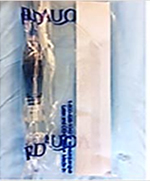
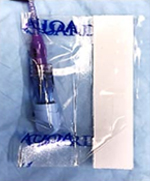
Fold the AquaGuard in half over the connection. Leave about 1/3 of the outer border of the white paper strip uncovered. This allows for easy removal.
|
 |
 |
| Aquaguard covering cap connected to IV line. |
Aquaguard covering cap and protective alcohol cover. |
|
-
Run your fingers over the outside edge of the AquaGuard. This seals the adhesive together. Do this over the tubing.
|
|
Instructions for removing AquaGuard:
-
Wash your hands with soap or use alcohol-based hand sanitizer for 15 seconds.
-
Remove the AquaGuard where the white paper backing strip is still in place. Discard in the trash.
-
Do not use scissors to remove the AquaGuard.
-
Do not re-use an AquaGuard.
-
Clean the cap with an alcohol wipe (15 second clean, 15 second dry) before any central line care.
Instructions for troubleshooting issues with AquaGuard:
AquaGuard gets dirty or wet
If you are in the hospital, call your nurse immediately. The central line cap and any tubing may need to be clamped and changed to reduce the risk of infection.
If you are home:
-
Clean your hands with soap and water or hand sanitizer.
-
If you have previously been told by your managing team that your infusion can be paused, then stop your child’s infusion and clamp the central line.
-
Use a clean cloth to wipe down all tubing and the outside of the AquaGuard.
-
Remove the AquaGuard. Inspect the central line catheter, IV tubing, and cap.
-
If there is no sign that the cap or tubing is dirty or wet, apply a new AquaGuard following steps above.
-
If cap or tubing is dirty or wet or you are unsure, follow the steps below.
Tubing connections or threading of cap gets dirty or wet
-
|
|
|
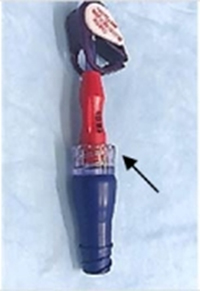
Soiling or fluid may get into threading of cap if barrier fails or is not in use.
|
Use a clean cloth to wipe away any moisture or body fluid that got on the IV tubing, catheter, or cap.
-
Use an alcohol pad to wipe down all tubing and the outside of any connections or cap. Clean for 15 seconds. Allow to dry for 15 seconds. Do not blow or fan the connections or cap.
-
If your child is followed by a home infusion company, immediately call the office. You will be directed on the next steps and discuss arrangements for possible tubing or cap change.
-
If you are at home and not working with a home infusion agency, call your child’s central line care team right away. If you cannot reach them, go to the emergency room.
Supply Issues
Talk to the central line care team before stopping use of Aquaguard. Stopping without guidance may raise the risk of line soiling and complications.
-
Other products or different AquaGuard shapes and sizes may be recommended for children with sensitivities.
-
If you didn’t receive enough AquaGuard or were given a different product, contact your home infusion agency. Your insurance plan and home infusion agency may require that another product be provided.
-
Your healthcare team may also have samples, and AquaGuard is available for purchase in stores or online.
Call the CHOP team managing your child's central line with any questions or concerns.
Reviewed May 2025 by Jean Abraitis, BSN, RN, Maureen Baylis, MSN, RN, Katy Murtaugh, BSN, RN, Lauren Le Goff, MS, CIC, Samantha Steich, BSN, RN, Melanie Brandan MSN, RN, VA-BC, Megan Lynch, MSN, RN