Stretching/PROM: Upper Extremity Passive Range of Motion for Infants
Important information:
Passive range of motion exercises are done to maintain flexibility and mobility of the joints. It is important to perform these exercises to prevent tightness or weakness.
Patient instructions:
-
Perform the exercises after the baby's bath or at each diaper change. Your therapist will tell you how many times to do each one.
-
These exercises should be done slowly and steadily. Never force a joint. Damage to the joint can happen if too much force is applied.
-
Joint range of motion is done on one joint at a time. Stabilize with one hand just above the joint and place your other hand below the joint to move the part through its full range of motion.
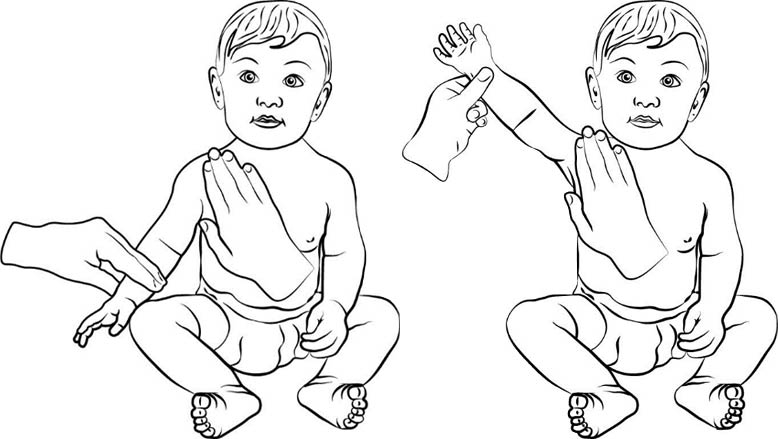
Shoulder flexion
-
Place your child sitting up or lying on their back.
-
Place one hand at the shoulder so that it doesn't come up. Hold their wrist with your other hand.
-
Bend their arm up so their hand is over the head, thumb leading. Keep the elbow straight.
|
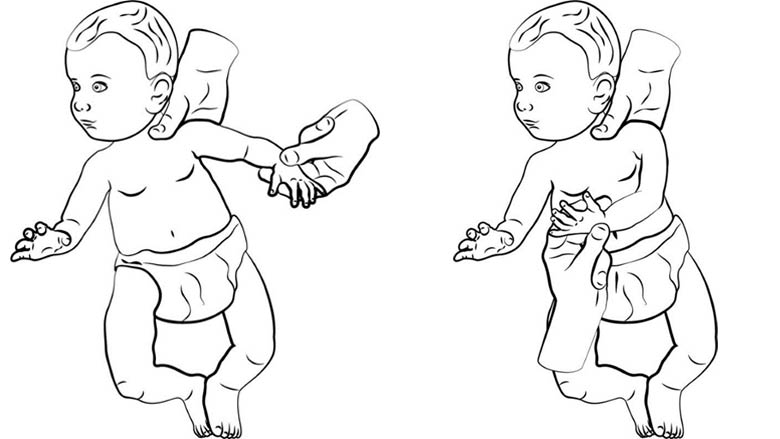
Shoulder movement to midline (horizontal adduction)
-
Lay the child on their back, arm away from body.
-
Place one hand at the shoulder. Hold their wrist with your other hand.
-
Bend their arm across the body toward their other arm.
|
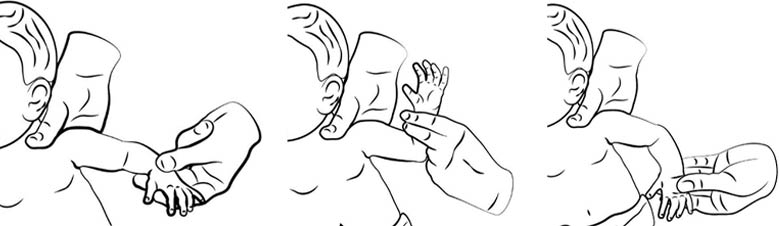
Shoulder rotation
-
Lay the child on their back, with their elbow bent and arm straight out to the side.
-
Hold their arm straight out to the side. Hold their forearm with the other hand.
-
Roll the forearm up, then roll the forearm down.
|
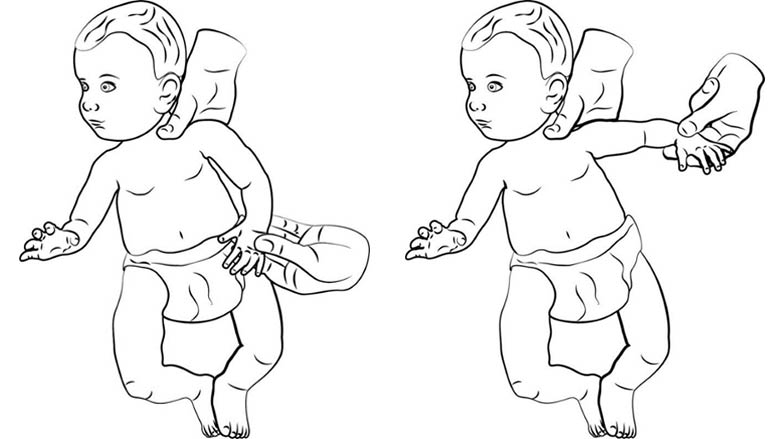
Shoulder movement away from midline (abduction)
-
Place the child lying on their back.
-
Place one hand at their shoulder so it doesn't come up. Hold their forearm with your other hand.
-
Bend their arm sideways away from the body. Their arm will be straight out to the side.
|
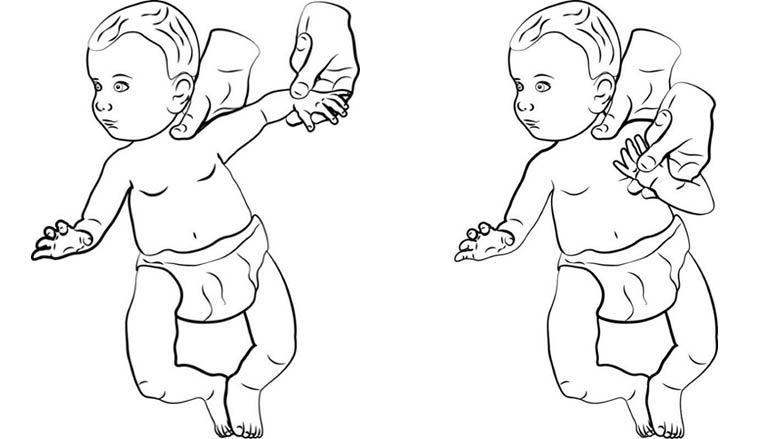
Elbow bend and straighten (flexion and extension)
-
Lay the child on their back with their elbow straight and their arm away from body.
-
Hold their elbow with one hand and their wrist with your other hand.
-
Bend their elbow gently, then straighten their elbow.
|
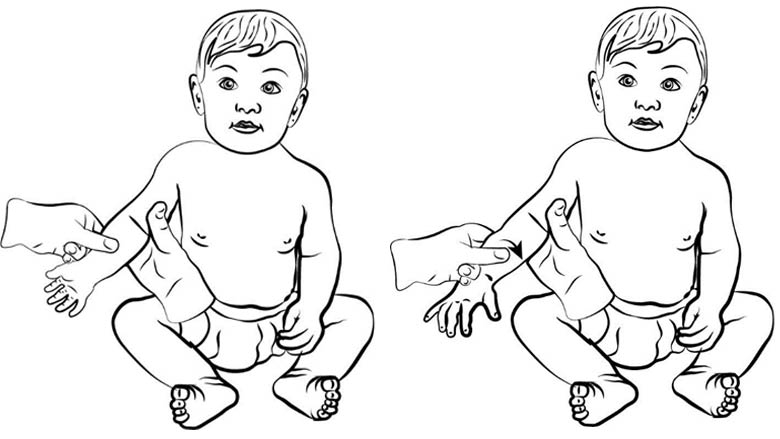
Forearm rotation (pronation and supination)
-
Lay the child on their back with their elbow bent and their arm close to body.
-
Hold their upper arm with one hand and their wrist with your other hand.
-
Roll the forearm and hand up, then roll the forearm and hand down.
|
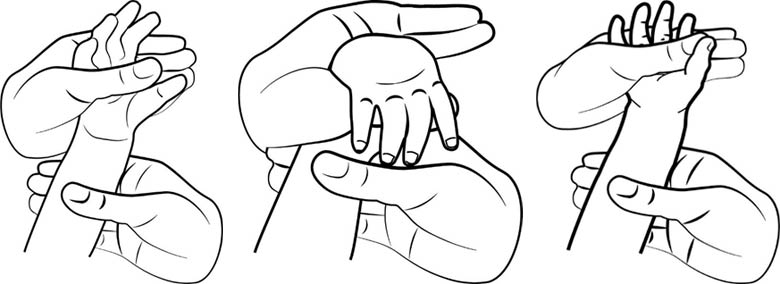
Wrist bend and straighten (flexion and extension)
-
Place the child lying on their back.
-
Hold their forearm and their hand in yours.
-
Bend their wrist forward and back.
|
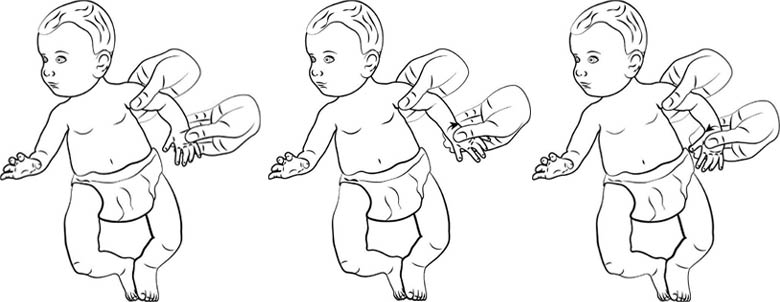
Wrist side-to-side (abduction and adduction)
-
Place the child lying on their back.
-
Hold their forearm and their hand in yours.
-
Move hand from side to side.
|
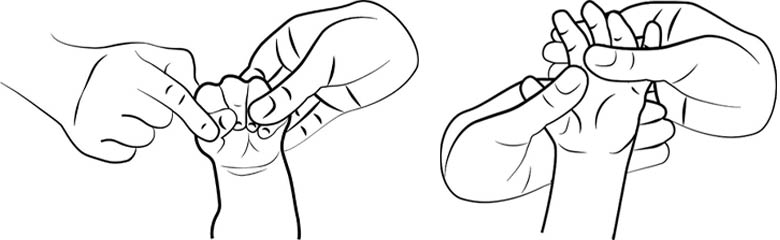
Finger bend and straighten (flexion and extension)
-
Begin in any comfortable position.
-
Hold the child's forearm and wrist with one hand. Hold the child's fingers with your other hand.
-
Bend the fingers, then straighten the fingers.
|
Reviewed November 2025 by Jill Velis MS, OTR/L