Hypopituitarism: How to Care for Your Child
Most children with hypopituitarism who are diagnosed and treated appropriately can live healthy, normal lives.
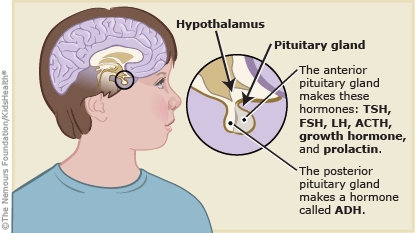

The pituitary gland is a small gland at the bottom of the brain. It is one of several glands that make hormones. Hormones are chemical messengers that send information and instructions from one set of cells to another.
The pituitary gland makes many types of hormones, including hormones that:
-
Help the body grow.
-
Control the amount of water in the body.
-
Help with sexual development and reproduction.
-
Produce milk in women who are breastfeeding.
-
Signal other glands to make certain hormones.
In hypopituitarism, the pituitary gland doesn't put out enough of one or more types of hormone. Kids with the condition may be smaller than average and have delayed puberty. It can be congenital (meaning a child was born with it), or be due to an injury, an illness, or a growth (tumor).
Doctors diagnose hypopituitarism with blood tests. They also may order an MRI or other imaging study to view the pituitary gland and areas of the brain near it.
Hypopituitarism is usually treated with hormone replacement medicine. Kids often need to take this medicine for a long time. This helps prevent serious health problems. If a tumor is causing the condition, surgery may help.



Your child:
-
Has new symptoms.
-
Has trouble taking prescribed medicine.
-
Has vision changes.
-
Starts getting headaches.
-
Has adrenal hormone insufficiency and experiences stress, such as an illness or injury. (If you have been instructed to do so by your health care provider, give your child an emergency shot of hydrocortisone.)