Benign Enlargement of the Subarachnoid Spaces in Infancy (BESSI)
Important information:
The brain has fluid-filled spaces called ventricles, which are normal structures in all brains. These spaces are filled with cerebrospinal fluid (CSF), which bathes and cushions the brain. Normally, CSF drains through the entire ventricular system, flows into the spine, and a space outside the brain known as the "subarachnoid space."
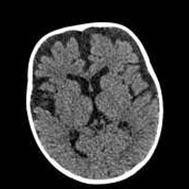
Your child has been referred to a neurosurgeon due to having a large head, and brain imaging has shown a condition called "benign enlargement of the subarachnoid spaces in infancy" (BESSI). In children with BESSI, there is a bit more fluid outside the brain in the subarachnoid space, but the ventricles remain normal in size. These children are typically neurologically healthy because there is no increased pressure within the brain. The head enlarges to make room for the extra fluid, allowing the body to adjust over time. BESSI does not require surgical treatment, but we will continue to monitor your child's development to ensure they remain healthy.
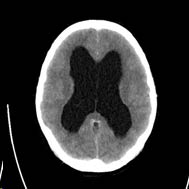
It is important to understand this condition is different from true hydrocephalus. Hydrocephalus is an enlargement of the ventricles and increased pressure in the brain. It occurs when there is a blockage within this system or an overproduction of CSF. True hydrocephalus requires neurosurgical treatment to prevent and manage symptoms.
 |
|
 |
| Hydrocephalus: The dark area in the center shows fluid inside the brain. |
|
BESSI: The thin dark gray layer shows extra fluid shows fluid outside the brain. |
Monitoring
Your child's primary care provider (PCP) will regularly measure their head circumference during well visits to monitor growth over time. These measurements are compared to those of other babies of the same age and sex. It's important to note that some perfectly healthy children may have heads larger than the typical range. Large heads can run in families, just like other physical traits like being taller. However, sometimes large heads can indicate true hydrocephalus, which is why your PCP may order imaging or refer you to a neurosurgeon to rule out this condition.
In some children, a condition called BESSI is identified. Babies with BESSI typically have an average head size at birth but may develop an increase in head circumference percentile around 4-6 months. Despite the increase, the fontanelle remains flat, and they may have a prominent forehead (frontal bossing). After this growth "jump," the head size stabilizes along a new curve. BESSI is labeled as “benign” because we know from seeing many children with this diagnosis that it doesn’t tend to cause any neurologic issues beyond having a larger head during infancy.
Testing and follow-up
If the fontanelle (soft spot) is still open enough, your child may undergo imaging, such as a head ultrasound. This is most often done before 6 months of age, to confirm the diagnosis of BESSI and confirm the ventricular system is normal. However, if your child has no symptoms, and their head size is following the usual BESSI growth pattern, regular follow-ups with your PCP are sufficient. The PCP will measure the head and monitor for neurologic symptoms. In most cases, children naturally grow into their head size, and the extra fluid is reabsorbed by around 2 years of age, so repeat imaging and long term follow up are not needed.
215-590-2780
Reviewed July 2024 by Allison Rodman PA-C