Helping Your Child Swallow Pills
Taking medicine can be hard for kids. Below are some ideas to make it easier and less stressful for you and your child. Every child is different, and it takes time to find what works best. If you need more help, please reach out to your pharmacist or healthcare provider.
Why taking medicine can be hard for kids
-
Sensory issues: The taste, smell, color, or texture of medicine can bother kids, especially if it’s new or they’ve had a bad experience before.
-
Feeling a loss of control: Taking medicine isn’t a choice, and that can be hard for kids. Kids may feel frustrated. They may say no because they want to be in control.
-
Big feelings or worries: Taking medicine can bring up a lot of feelings. Kids may feel nervous about trying something new, wonder why they need medicine if they feel fine, or worry it could make them feel worse.
-
Fear of swallowing pills: Pills can seem big or scary. Kids might worry about choking, gagging, or the pill getting stuck, which can make swallowing them stressful.
How to help your child
Stay calm and patient, and use a kind, honest voice. If one idea doesn’t work, take a break and try something different. Do not call medicine “candy” or try to trick your child. Instead, tell them it’s okay to feel nervous and explain in simple terms why the medicine helps their body.
Remember that every child learns at their own pace. Try not to punish, pressure, or compare them to others. Set clear, respectful limits, and praise even the smallest efforts—these moments of encouragement help build your child’s confidence over time.
Simple strategies to try:
-
Use rewards and visuals: Try a sticker chart, countdown, or schedule with pictures so your child can see their progress. Give small rewards after the first few doses to help build motivation.
-
Build it into your routine: Connect medicine time with daily tasks, like brushing teeth or reading a bedtime story, to make it routine. Choose a calm time when you can give your full attention.
-
Create a calm, quiet space: Have a favorite blanket, toy, or comfort item nearby to help your child feel safe and relaxed.
-
Use fun reminders: Try silly songs or alarms for younger kids, or phone notifications or reminders for older ones.
-
Offer small choices: Let your child pick where to take the medicine, or what to drink afterward. Even small choices help build a sense of control.
-
Use pretend play: Have a favorite toy “take” the medicine first or make it part of a tea party or superhero mission.
-
Practice coping skills: Practice deep breathing (like blowing out candles), distraction (like a video or music), or imagining a favorite place.
Taking pills safely
Children learn to swallow pills at different ages. Most children are ready around age 4 or older. It helps if your child is willing to try and interested in learning a new skill.
Medicines work best when given the right way. Always follow the instructions on the medicine label. Ask your pharmacist or healthcare provider before you crush or cut any pills. Some pills cannot be cut or crushed.
Some, but not all, medicine can be mixed with food and liquid. Check with your healthcare provider or pharmacist to see if this is possible.
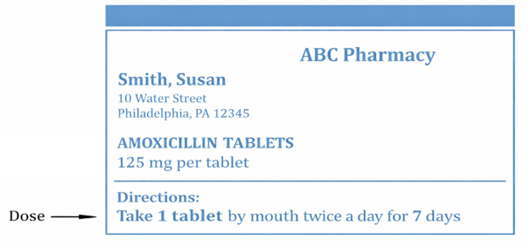
Below is a sample medicine label and a list of things to check before giving medicine to your child:
Right amount/dose: Make sure you know exactly how many pills to give and how often. The dose will be listed on the medicine label.
Right time: The label will tell you how often to give the medicine. Write down the times so you don’t miss a dose.
Right child: Check the label to make sure it has your child’s name.
Right number of days: Some medicines are given long term, and some medicines are given for a set number of days. If your healthcare provider tells you to give the medicine for a set number of days, mark these days on a calendar so you know when to stop.
Right place: Store the medicine as directed on the label.
Call your healthcare provider if you think your child needs a new prescription. Throw away any leftover prescription medicine.
Learning to swallow pills
-
Practice before it’s needed. It’s easier to learn when your child is calm and feeling well. Spend 5–10 minutes practicing each day to help your child feel more confident and comfortable.
-
Talk about other skills your child has learned. Remind them how they learned to ride a bike or tie a shoelace to help them feel confident.
-
Show how it’s done. Let your child see you swallow a pill so they know it’s safe and possible.
-
Explain how the throat works. Use simple words, such as: “Your throat is made to swallow food, drinks, and medicine. It has special muscles that know just what to do to help things go safely into your belly.”
-
Use fun examples. Try saying, “Imagine your pill going down a water slide, with a sip of water to help it along.”
-
Practice with small candy. Start with tiny pieces, like a sprinkle. After a few successful tries with the sprinkle, try a larger candy like Tic Tacs, Nerds, M&Ms. Slowly increase the size until it matches the size of the pill your child will take.
-
Try different tongue positions. Have your child sip a drink, place the candy (or pill) on the front, back, or side of their tongue, then sip again to swallow. Different spots can make swallowing easier.
-
Try different head positions when swallowing. Have your child sip a drink, place the candy (or pill) on the tongue, then sip again, try swallowing the pill in different head positions to see which works best: chin down, head straight, turned to the side, leaning forward.
-
Use a straw. Drinking through a straw can help the pill go down more smoothly for some kids.
Improving the taste
-
Use soft food. Place the pill on a spoon with a small amount of soft food, like applesauce, or jelly. Make sure your child knows the pill is there before swallowing.
-
Coat the pill. Cover it with something tasty, like chocolate syrup, Jell-O, or cake icing, to make it easier to swallow.
-
Try a thicker drink. Use something thicker than water to take the pill with, like a fruit puree or a dairy-free smoothie.
-
Mask the aftertaste. Give a small amount of something with a strong flavor, such as chocolate syrup or peppermint, to get rid of any lasting taste.
Dissolving pills into liquid
You can dissolve a pill in an oral syringe by following the steps below. Always ask your pharmacist or healthcare provider before you crush or cut any pills. Some pills cannot be cut or crushed.
-
Remove the plunger from the syringe.
-
Place the pill in the syringe and place the plunger back on the syringe.
-
Pull up some water or juice into the syringe. Some medicines may require the fluid to be room temperature to fully dissolve the pill.
-
Place a cap on the syringe.
-
Gently swirl or shake the syringe. Repeat until pill is fully mixed with liquid.
Call your CHOP care team if:
-
Your child vomits medicine more than once.
-
You are unable to get your child to take the medicine.
-
You think your child is having an allergic reaction (rash, hives).
-
Call 911 if your child has trouble breathing or swelling of the face.
-
Your child has trouble swallowing pills. You provider or pharmacist may offer options, such as:
• A liquid form of the medicine
• Smaller pills instead of one large pill
• A different brand that may be easier to take
Taking medicine can be hard for kids, but with patience, practice, and the right tools, it can get easier over time. Every child is different; what works for one may not work for another. Stay calm, keep communication open, and celebrate small successes along the way. If taking medicine continues to be hard, talk to your pharmacist or healthcare provider for more ideas and support.
Reviewed January 2026 by Melanie Hoynoski, MPH, CCLS, CTRS, Kerry Hurlbut, DNP, CRNP and Stephanie Li, PharmD