Infected Piercing: Caring for Your Child
A piercing can become infected when germs get into broken skin. Signs of infection include pus, bleeding, pain, redness, or swelling. Sometimes pus collects under the skin and forms a lump called an abscess. Infected piercings are common and usually heal well with proper care at home.
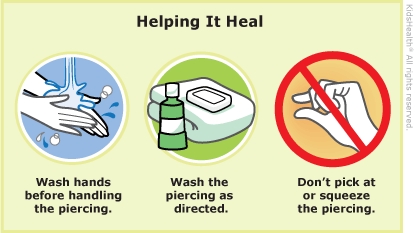

Follow your health care provider's instructions for:
-
Whether you should remove the piercing.
-
If your child should take any antibiotics or use any ointments.
-
How to clean the infected piercing. In general:
-
For skin piercings, clean the area at least once a day with soap and water. Blot dry with a clean towel.
-
For tongue, cheek, or lip piercings, your child should use an antibacterial, alcohol-free mouthwash after every meal and before bed.
Other reminders:
-
Always wash hands before cleaning or handling the piercing.
-
For pain and swelling, hold a warm compress (a clean, wet, warm washcloth) to the piercing for a few minutes.
-
Remind your child to not to pull on or play with the piercing.

Your child:
-
Gets a new or higher fever
-
Develops a sore lump near the piercing
-
Has increasing redness, swelling, warmth, or soreness at the area
-
Has symptoms that do not start to get better in 2 days

Can piercing infections be prevented? It helps to:
-
Get piercings from a licensed practitioner who:
-
Washes their hands before each piercing
-
Wears disposable gloves
-
Uses single-use needles and sterilized instruments
-
Uses hypoallergenic, nickel-free jewelry
-
Clean piercings as directed.
-
Avoid swimming until the piercing is healed.
-
Avoid pulling on or playing with the piercing.
-
Be sure any earring, stud, or back is loose enough not to cause irritation.