Contact Dermatitis: How to Care for Your Child
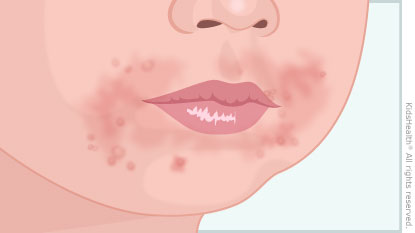
Contact dermatitis is a red, itchy rash that happens after a person comes into contact with an irritant such as poison ivy, a detergent, or metals. Health care providers may not know right away what caused a child's dermatitis. You can help your child feel better and avoid further exposure to the irritant.

-
If recommended by your health care provider, use wet dressings, moisturizers, calamine lotion, steroid creams, and/or other treatments.
-
Give your child any medicines recommended by your health care provider as directed.
-
Wash the rash with mild soap and rinse completely.
-
Wash clothes and linens with mild unscented detergent and use an extra rinse cycle for bedding and towels.
-
Remind your child not to scratch the skin because this can make the rash worse and lead to a skin infection.
-
Encourage your child to wear clothing made from smooth cotton, which may be more comfortable than other fabrics.
-
Younger children can wear lightweight gloves to bed to prevent scratching.
-
If your child has poison ivy, oak, or sumac, wash all affected clothes or gear well.
-
If the health care provider couldn't tell what caused the dermatitis, try to notice what your child comes into contact with that might cause the reaction.

-
Your child still has symptoms and you don't know what caused the rash and itching.
-
Your child develops signs of infection like fever, swelling, tenderness, or warmth of the skin around the irritated area.
-
The rash oozes pus or develops pus-filled blisters.
-
The rash does not improve with treatment or gets worse.
-
Itching makes it hard for your child to sleep.

Your child has:
-
a rash from poison ivy, oak, or sumac that begins to cover a large part of the body or involves the eyes or genitals
-
symptoms of an allergic reaction, such as trouble breathing, tightening of the throat, or fainting

What is contact dermatitis? Dermatitis can be either:
-
Irritant contact dermatitis, caused by contact with an irritating substance, such as a chemical, soap, skin product, or detergent.
-
Allergic contact dermatitis, caused by contact with something a person is allergic to. Common allergens include fragrance in perfumes or lotions, metals (such as nickel), chemicals, hair dye, or plants (like poison ivy, oak, or sumac).
What happens with contact dermatitis? Redness, bumps, itching, dryness, blistering, or swelling can happen after contact with the problem-causing substance. The rash can appear soon after contact or may take a while to show up. When the substance is avoided, the rash usually clears up in a few weeks.
If the contact dermatitis doesn't get better, the health care provider may refer you to a dermatologist (skin doctor). The dermatologist can do tests to find the allergy triggers to avoid.